

40% of shelf space, shifted to a competitor, eleven years of partnership, gone without a word. The regional sales manager got the call on a Thursday afternoon. The distributor who’d been moving their product for over a decade had quietly made the switch. No argument, no warning email, no exit conversation, just a reorder that never came, and then a visit to the shop floor that explained everything.
The manager stood there looking at the competitor’s product, where theirs used to be, and tried to figure out when it happened. The loyalty program was still running. The points were still accumulating. The quarterly scheme had just been refreshed with better rewards than last year.
The Program Was Running, But The Loyalty Wasn’t.
This is how loyalty programs actually end. Not with a termination notice, but with a shelf that quietly fills with someone else’s product while the brand is still printing reward catalogs.
Channel partners today are exposed to multiple competing brands, similar incentive structures, and constant promotional noise. Purchases get timed around schemes, rewards get maximized strategically, and engagement stays limited to transactional moments, which means the loyalty was never really there to begin with.
The brands would do everything the textbook said: points for purchases, tiered slabs, quarterly refreshes, and a catalog with premium gifts at the top end. They’d even increase the budget of last year after participation started slipping, assuming the problem was reward value.
And yet, it wasn’t.
The Real Failure Happened Long Before the Shelf Changed
Go back eighteen months, and you start to see where it actually broke.
The distributor had been trying to understand the new earnings rules for two quarters. Stock Keeping Unit (SKU-level) multipliers, region-specific exclusions, and slabs that reset mid-cycle without clear communication.
From a retailer’s perspective, frequent rule changes without proper communication create suspicion, the slow-forming belief that the program is designed to reduce payouts rather than genuinely reward effort.
The retailer filed two claims that got rejected. Nobody explained why clearly. The WhatsApp message from the field rep said something about invoice formatting, and he resubmitted. One got approved weeks later, the other just disappeared into silence.
Nearly 20 to 25% of rejected claims in channel loyalty programs are due to processing errors, not fraud, but for the partner on the other end, every rejection feels intentional. And once that perception sets in, the emotional relationship with the brand deteriorates fast.
He didn’t call to complain, and then he just started giving the competitor a little more attention. A little more shelf. Whether in retail distribution or Healthcare & Nursing Services, loyalty rarely collapses overnight—it erodes through repeated moments of friction and uncertainty.
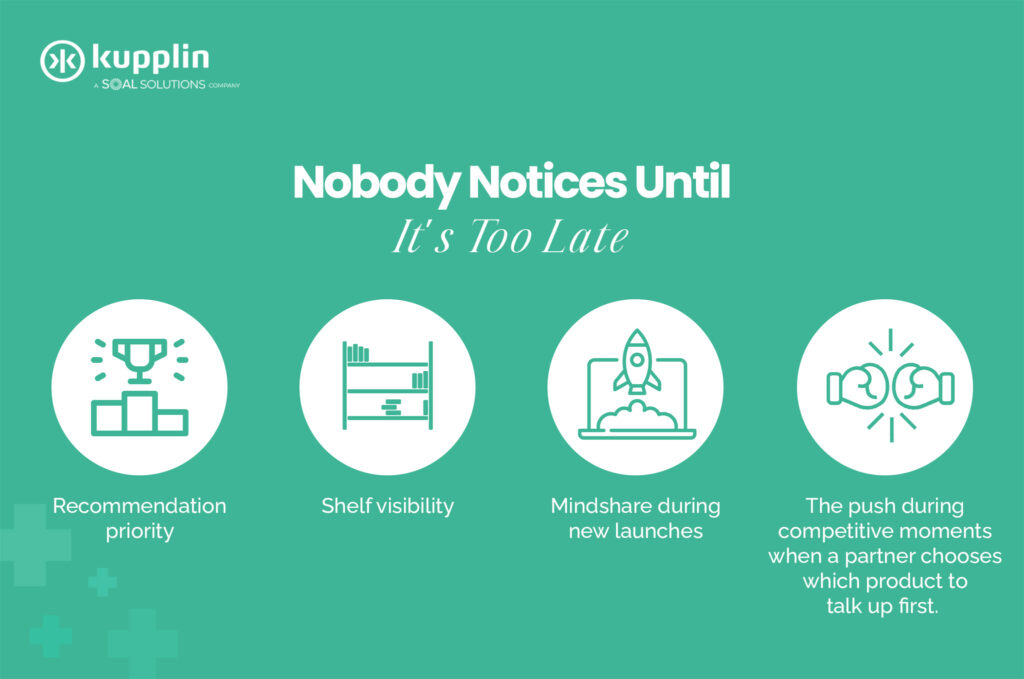
Nobody Notices Until It’s Too Late
That’s the brutal thing about loyalty program failure in the channel. It doesn’t announce itself.
When channel loyalty breaks down, brands don’t immediately see a drop in numbers. What they lose is more subtle:
- Recommendation priority,
- Shelf visibility,
- Mindshare during new launches,
- The push during competitive moments when a partner chooses which product to talk up first.
Retailers don’t exit loudly. They redirect effort silently.
The sales manager’s company had been tracking redemption rates and points balances. Both looked fine on the dashboard. What the dashboard couldn’t show was that the distributor had mentally checked out eight months ago and was just running out the clock on the remaining points before he made the full switch.
So by the time anyone noticed, the relationship had been over for nearly a year.
What Actually Needed to Change
After the shelf visit, the brand ran an internal review. They expected to find low rewards. What they found was messier.
The program was built for internal finance and compliance, not the distributor. Audit-friendly slabs. Approval workflows for the brand, not the partner. A claims system that worked on paper but was a nightmare in real life.
Loyalty programs that don’t fit how partners actually work fail quietly. No complaints. No warning. That’s what makes channel loyalty so deceptive.
The distributor wasn’t asking for more rewards. He wanted something simple, predictable, and fast. Knows earning before ordering, claims without chasing anyone.
One-size-fits-all doesn’t work. A regional reseller and a global distributor have different motivators. Push the same structure on everyone, and most will feel overlooked and quietly disengage.
The Conversation That Should Have Happened Earlier
When the brand finally sat down with the distributor, after the shelf visit and the lost business, he didn’t hold back.
“You stopped paying attention to what I actually needed,” he said. “Your program wasn’t built for someone like me.”
That’s what stings. Not “your rewards were weak.” Not “the other guy paid more.” Just: you weren’t really listening.
Engaged channel reps sell more, and 80% say incentives strengthen those vendor relationships. But that only works if the program is a real, lasting commitment, not something you roll out and ignore.
Keeping partners around isn’t about a bigger rewards catalog. It’s about listening, clear talk, and building a program that fits how they actually run their business, not what’s easiest for your internal team.
Conclusion
The distributor eventually came back, partially. The brand rebuilt the program from the ground up, simpler earning logic, automated claims, real-time visibility into balances, and a field team that was actually trained to have conversations instead of just pushing scheme updates.
It took another eighteen months to rebuild what had quietly collapsed over the same amount of time.
Channel loyalty programs fail at design, not at redemption. The rewards aren’t usually the problem. The experience around them is. And by the time a brand figures that out, the shelf has already changed.
Kupplin works with organizations on the partner engagement strategy questions that actually matter, building programs that partners actually want to stay in, not just ones that look right on a dashboard. If your channel partner retention numbers are moving in the wrong direction, reach out. The story above doesn’t have to be yours.
Frequently Asked Questions (FAQs)
Q1: Why do channel loyalty programs fail even when rewards are competitive?
Rewards aren’t the real issue. Loyalty programs fail because of bad experience, confusing rules, slow claims, and poor communication. Build around your processes, not how partners actually work. Partners who don’t trust the program check out quietly, long before they complain about value.
Q2: How do you know if your channel partner retention is at risk before partners leave?
The warning signs are behavioral, not always in the data. Fewer reorders. Less frequent claims. Partners going quiet. By the time numbers drop, disengagement has been building for months. Talk to partners regularly, not just send updates. That catches it earlier.
Q3: How does Kupplin help brands rebuild partner engagement strategy?
We help brands find where the partner experience is breaking down, not just the data, but what partners actually feel. Then we build programs that fit how they work, not what’s easy for you. Reach out to Kupplin. Let’s see where you’re quietly losing ground.
Need the right talent for your team?
Partner with Kupplin to access data-driven recruitment solutions that connect you with skilled professionals quickly and efficiently.
Book a Free Consultation
